


.png)

.png)
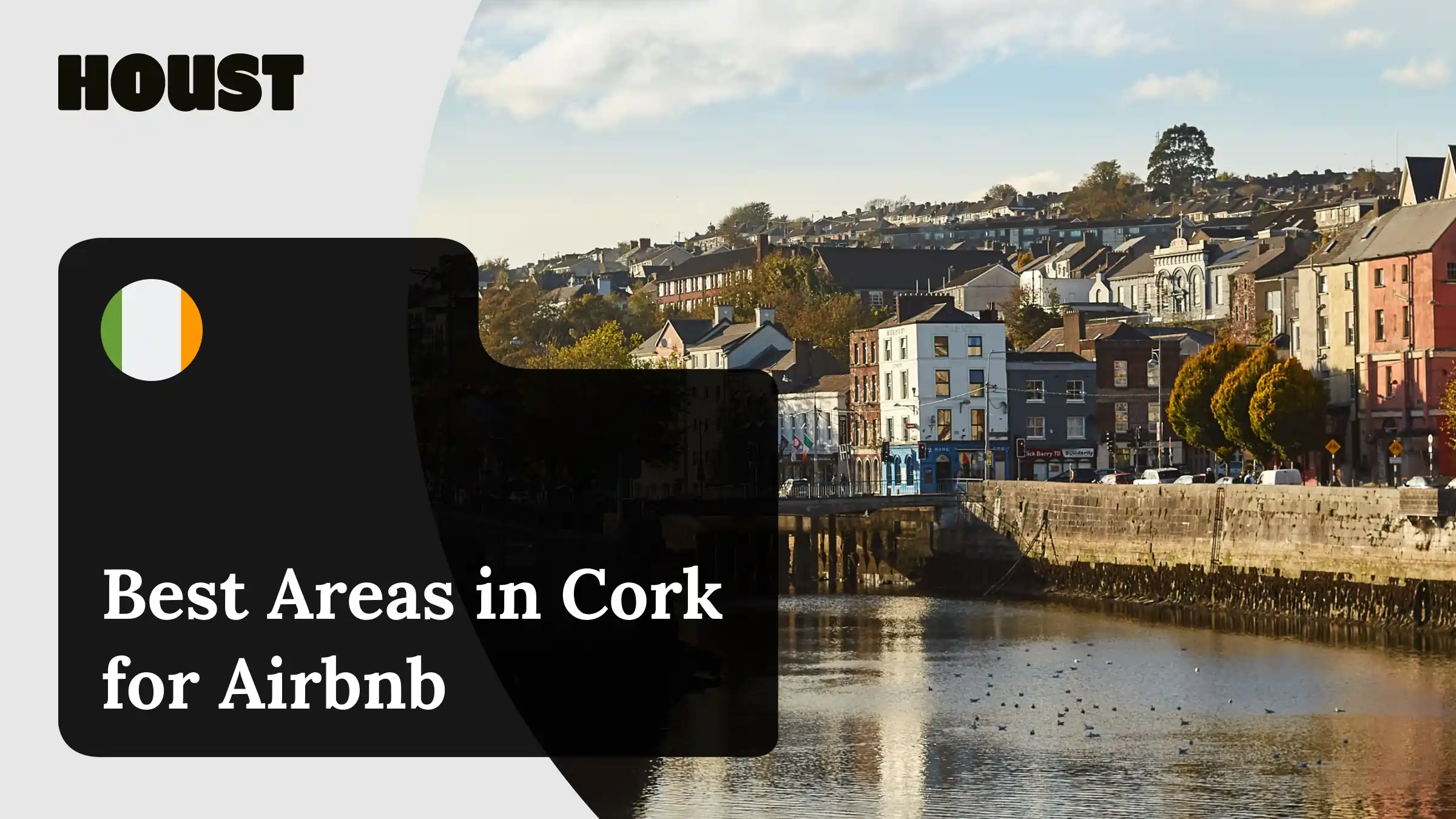
The short version: Cork is Ireland's steadiest short-let market, with year-round demand from tourism, business travel and two universities that smooths out the winter dip. The strongest areas are the city centre for demand, Montenotte and St Luke's for character, and Douglas and Blackrock for calmer, longer stays. But Cork sits under Ireland's tight short-let rules, RPZ planning and the Failte Ireland register, so the regulation shapes where you can operate. Read the rules section first.
Table of Contents

⭐ Rated 4.8/5 by 2,500+ Hosts
.webp)
⭐ Rated 4.8/5 by 2,500+ Hosts
🚀 Start & Scale Your Airbnb Business with Houst
Join Houst’s Airbnb Business Partnership Program to start, manage, and grow your short-term rental business. With expert marketing, automation tools, and dynamic pricing strategies, we help you maximise earnings and scale faster.
⭐ Rated 4.8/5 by 2,500+ Hosts
Why location matters for Airbnb in Cork
Cork has an unusually broad demand base for its size. Tourism peaks in summer as visitors head for Kinsale, Kerry and the Wild Atlantic Way, the Jazz Festival drives one of the most reliable autumn spikes in the Irish market, and a strong pharmaceutical and technology sector provides a base of longer-stay business bookings through the quieter months.
That mix matters. Cork rarely leans on a single guest type, so occupancy holds steadier across the year than in purely seasonal destinations, which protects annual yield and makes income easier to plan around. The choice of area is really a choice about which of those demand streams you want to capture.
As with the rest of Ireland, though, the rules come first. Where a property sits, and whether it is your home or an investment, can decide whether you can legally short-let it at all. Confirm that before you weigh the neighbourhoods.
The best areas in Cork for Airbnb
These are the neighbourhoods with the strongest short-let demand, and what each is good for.
City centre. The island core between the channels of the River Lee, walkable to St Patrick's Street, the English Market, the Opera House and most of the nightlife. The highest, most consistent demand in Cork, close to year-round on the back of tourism and business travel. The default choice for a first listing.
Montenotte and St Luke's. The characterful Victorian terraces on the hill above the city, with period houses, elevated views and a short walk or bus down to the centre. Strong appeal to guests wanting a distinctive, upscale Cork base rather than a standard apartment.
Blackrock. A sought-after village on the south side, with the castle and observatory, the marina walkway and a growing food scene. Popular with families and longer-stay guests, and an easy run into the city.
Douglas. A well-served suburb with shopping, restaurants and easy access to the airport and the South Link Road. Reliable demand from families, business travellers and visitors wanting parking and space over a central address.
Bishopstown and the UCC area. The university belt, drawing visiting academics, parents and conference guests through the academic calendar. Steadier, calendar-driven demand that is less exposed to the tourist cycle, with University College Cork and the hospital nearby.
Ballincollig. A large, well-connected town to the west, with the Regional Park, retail and a strong local base. Good value and steady demand from business and family guests, suited to longer stays.
The rules that decide where you can operate
Cork sits under Ireland's strict short-let regime, and the rules shape the area decision.
Rent Pressure Zones. Much of Cork city and many surrounding towns, including Carrigaline, Cobh, Midleton and Mallow, are designated Rent Pressure Zones. In an RPZ, short-letting a property that is not your principal private residence generally requires planning permission for change of use, and permission is difficult to obtain. Applications have been refused on the grounds that they would worsen the shortage of long-term housing.
Homesharing exemption. Letting a room, or your whole principal private residence while you are away, is treated far more leniently and is exempt from the change-of-use planning requirement, subject to limits. This is the most straightforward route for most individual hosts.
Failte Ireland register. Ireland's Short-Term Tourist Letting Register is in force. All short-let hosts must register, and platforms are required to check for a valid registration number, so an unregistered property risks being removed.
The practical takeaway: in Cork, an existing, compliant, registered short-let, or a genuine homeshare arrangement, is the realistic path. Confirm the RPZ and planning position for a specific property before you buy or list.
Managing a short let in Cork
Cork rewards compliance and steady operation. The broad demand base means a well-run property can hold occupancy across the year, while the Jazz Festival, summer tourism and university calendar reward pricing that flexes with each spike. Getting the registration and planning position right protects the income underneath all of it.
Houst manages short lets across Cork city and the surrounding suburbs, from city-centre apartments to homes in Douglas, Blackrock and Bishopstown. We handle registration and compliance as part of the service, list across Airbnb, Booking.com, Vrbo and Google, price dynamically against local demand, and manage guest communication and cleaning. See the detail on our Cork Airbnb management page, read what a property earns in our Cork income guide, or compare local firms in our guide to the best Airbnb management companies in Cork.
Getting started in Cork
The city centre delivers the highest, steadiest demand. Montenotte and St Luke's offer character and views. Blackrock, Douglas, Bishopstown and Ballincollig trade some central demand for calmer, longer stays, better parking and steadier local bookings.
In Cork, though, the rules come first. Confirm the RPZ and planning position for the specific address, and register the property, before you weigh the areas. Then run it through a free income estimate to compare projected earnings against the purchase price.
Airbnb areas in Cork: common questions
What is the best area in Cork for Airbnb?
The city centre delivers the highest and steadiest demand, close to year-round on tourism and business travel. Montenotte and St Luke's suit character-led stays, while Douglas, Blackrock and Bishopstown suit calmer, longer bookings. Subject, always, to the local rules.
Which Cork area has the highest Airbnb demand?
The city centre, on the island between the channels of the River Lee, has the strongest and most consistent demand, driven by tourism, nightlife and business travel. The university area around Bishopstown adds steady, calendar-driven bookings.
Do I need planning permission for an Airbnb in Cork?
Often, yes. Much of Cork is a Rent Pressure Zone, where short-letting a property that is not your principal private residence generally needs planning permission for change of use, which is hard to obtain. Letting your own home or a room is treated more leniently. Check your specific property first.
Do I need to register my Cork short let?
Yes. Ireland's Failte Ireland Short-Term Tourist Letting Register is in force, and all hosts must register. Platforms check for a valid registration number, so an unregistered property risks being delisted.
How much can I earn from an Airbnb in Cork?
Cork's broad, year-round demand supports steadier occupancy than purely seasonal markets, though earnings vary by area, property and season. Get a free estimate for your specific address to see the realistic figure.
Frequently asked questions
What is the best area in Cork for Airbnb?

Which Cork area has the highest Airbnb demand?
Do I need planning permission for an Airbnb in Cork?
Do I need to register my Cork short let?
How much can I earn from an Airbnb in Cork?


Reviewed by Andrei S., Head of Growth at Houst, for regulatory accuracy and commercial relevance.


