


.png)

.png)
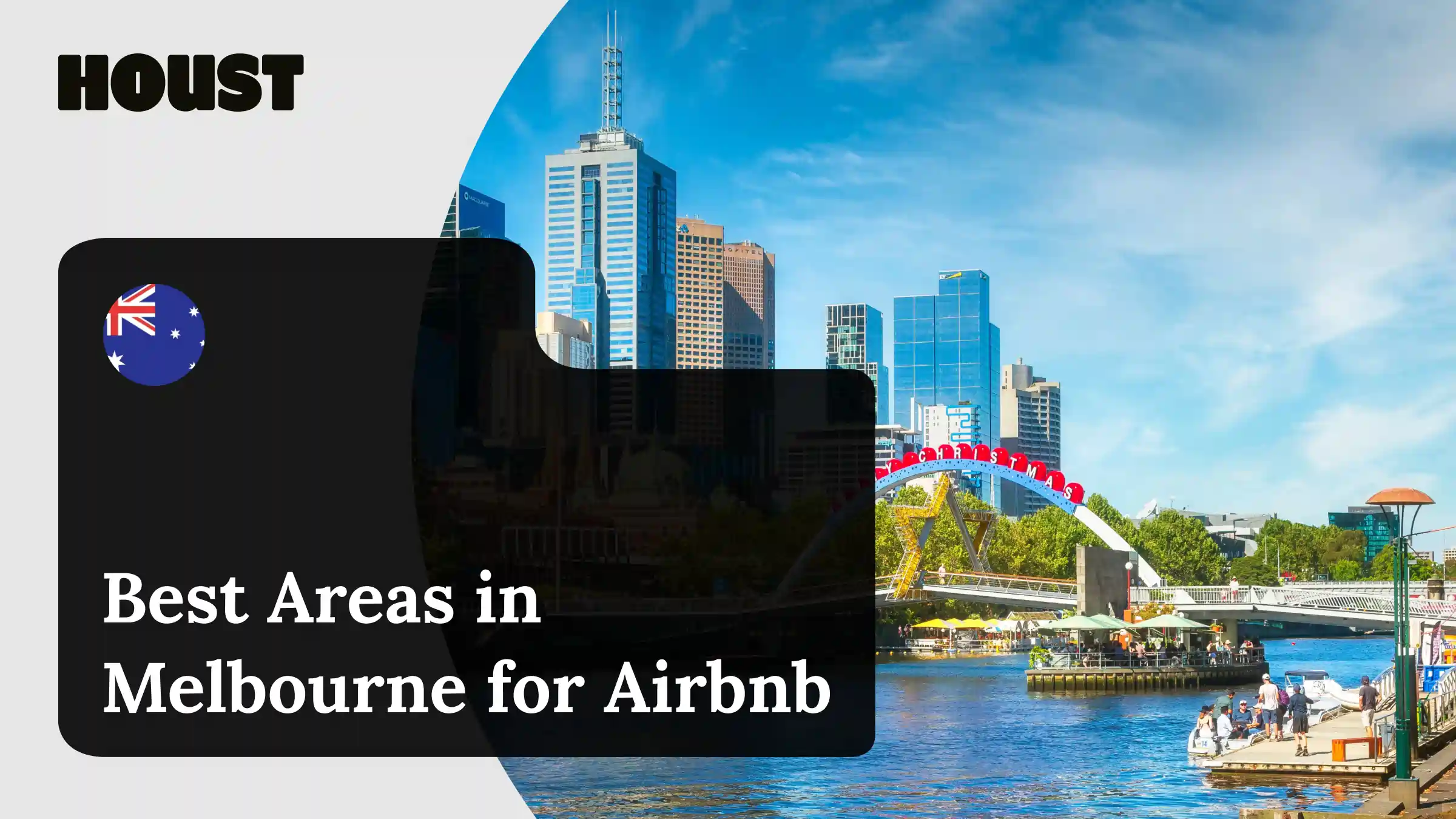
The short version: Melbourne is one of Australia’s strongest short-term rental markets, with steady year-round demand and huge event-driven peaks. The best suburbs are the CBD and Southbank for central convenience, Fitzroy and Collingwood for culture, St Kilda for the beach, and Richmond for sport and events. Victoria now applies a 7.5% short-stay levy to bookings under 28 nights, with a principal-residence exemption. A well-run two-bed averages around 334 Australian dollars a night at roughly 70% occupancy. This guide covers what drives demand in each area, and the rules you need.
Table of Contents

⭐ Rated 4.8/5 by 2,500+ Hosts
.webp)
⭐ Rated 4.8/5 by 2,500+ Hosts
🚀 Start & Scale Your Airbnb Business with Houst
Join Houst’s Airbnb Business Partnership Program to start, manage, and grow your short-term rental business. With expert marketing, automation tools, and dynamic pricing strategies, we help you maximise earnings and scale faster.
⭐ Rated 4.8/5 by 2,500+ Hosts
Why location matters for Airbnb in Melbourne
Melbourne runs on events. The Australian Open, the Grand Prix, the spring racing carnival, AFL at the MCG, concerts at Rod Laver Arena and the comedy and arts festivals all drive sharp, calendar-wide demand spikes, and proximity to the right precinct can make a listing’s year. On top of that sits steady baseline demand from tourism, business travel and a large student population.
The city is compact at its core and superbly connected by tram, with a free tram zone across the CBD and Docklands. That makes central and inner suburbs highly walkable and well-linked, so guest experience is shaped as much by the character of a suburb as by raw distance.
One thing now shapes returns across every suburb: Victoria’s 7.5% short-stay levy, live since January 2025. It applies to bookings under 28 nights and is covered in the rules section below. Factor it into pricing from the start.
The best areas in Melbourne for Airbnb
These are the suburbs with the strongest short-term rental demand, and what each is good for.
Melbourne CBD. The heart of the action, walkable to Federation Square, the laneways, Queen Victoria Market and the free tram zone. Reliable year-round demand from tourists and business travellers, and high rates for well-furnished apartments. The default central choice. We also provide Airbnb management in the Melbourne CBD.
Southbank. Just across the Yarra, with the Arts Centre, the NGV, Crown and the convention precinct. Modern apartments with river or skyline views command a higher nightly rate, and balcony space or parking helps a listing stand out. Strong tourist and business demand. We also provide Airbnb management in Southbank.
Fitzroy and Collingwood. Melbourne’s bohemian core, Brunswick and Smith Street dining, street art, live music and boutiques. Draws guests wanting a local, cultural stay, with strong weekend demand. Among the more expensive inner suburbs, and consistently high-performing. Houst offers Airbnb management in Fitzroy and short-term rental management in Collingwood.
St Kilda. The favourite beachside suburb, with the beach, Luna Park, Acland Street and a lively nightlife scene. Strong summer demand and a clear leisure draw, popular with couples and groups. A tram ride from the CBD. We also provide Airbnb management in St Kilda.
Richmond. The sport and events suburb, minutes from the MCG, Rod Laver Arena and AAMI Park, so it captures sharp demand spikes on match and concert days. Bridge Road shopping and Swan Street dining sustain demand between events, plus steady business travel.
Carlton. Melbourne’s Little Italy, Lygon Street dining, the Melbourne Museum and the Royal Exhibition Building, next to the university. Steady demand from visitors, academics and event-goers, with a walkable, cultured feel. Houst offers Airbnb management in Carlton.
South Yarra. Upmarket and inner-city, with Chapel Street shopping, fine dining and the Botanic Gardens. Appeals to guests wanting a polished stay with easy city access, and delivers strong occupancy beyond just event weeks. Houst offers Airbnb management in South Yarra.
The rules that decide your returns
Victoria’s short-term rental framework changed significantly in 2025, and it affects every Melbourne host.
The 7.5% short-stay levy. Since 1 January 2025, Victoria applies a 7.5% levy to short-stay bookings of less than 28 consecutive nights. It is calculated on the total booking fee, including cleaning and service charges, and the major platforms, Airbnb, Stayz and Booking.com, collect and remit it automatically. For direct bookings, you register and lodge with the State Revenue Office yourself. Build it into your pricing.
Principal-residence exemption. The levy does not apply to a stay in the owner’s or renter’s principal place of residence, or to rooms that cannot be occupied separately from the main home. Investment and second properties are liable.
No statewide night cap. Unlike Sydney, Victoria has no statewide cap on nights. However, individual councils can introduce their own registration schemes or night limits, so check the rules for the specific local government area.
Owners corporation powers. An owners corporation can now vote, with a 75% majority, to ban short-stay letting in a strata building, except where it is the host’s principal residence. As with Sydney, this makes checking the building’s rules essential before you buy an apartment for short-let use.
The practical takeaway: the levy trims yields on investment properties, so pricing discipline matters more than ever, and the building’s owners-corporation position should be confirmed before purchase.
Managing a short let in Melbourne
Melbourne rewards event-led pricing. The Australian Open, Grand Prix, spring racing and major concerts move rates dramatically, and a listing priced flat through those weeks leaves serious money behind. With the 7.5% levy trimming yields, capturing those peaks and running an efficient operation matters more than ever.
Houst manages short-term rentals across Melbourne, from CBD and Southbank apartments to Fitzroy terraces and St Kilda flats. We handle the levy and compliance, list across Airbnb, Booking.com, Vrbo and Google, and price dynamically against the events calendar. See the detail on our Melbourne Airbnb management page, or read what a property earns in our Melbourne income guide.
Getting started in Melbourne
The CBD and Southbank give the strongest central demand and rates. Fitzroy and Collingwood lead on culture, St Kilda on the beach, and Richmond on sport and events. Carlton and South Yarra offer steady, walkable demand with a distinct character.
Whichever suburb you weigh up, factor in the 7.5% levy on investment properties and confirm the building’s owners-corporation position before you buy. Then run the address through a free income estimate to compare projected earnings, after the levy, against the purchase price.
Airbnb areas in Melbourne: common questions
What is the best area in Melbourne for Airbnb?
The CBD and Southbank deliver the strongest central demand and highest rates. Fitzroy and Collingwood lead for culture, St Kilda for the beach, and Richmond for sport and events. The right one depends on your property and target guest.
Which Melbourne area has the highest Airbnb nightly rate?
Southbank and the CBD command the highest rates, particularly modern apartments with river or skyline views. Fitzroy and South Yarra also perform strongly. Rates spike citywide during major events like the Australian Open and Grand Prix.
What is the short-stay levy in Melbourne?
Since 1 January 2025, Victoria applies a 7.5% levy to short-stay bookings under 28 consecutive nights, calculated on the total booking fee. Platforms like Airbnb collect it automatically. A stay in the owner’s principal residence is exempt.
Is there a night limit on Airbnb in Melbourne?
There is no statewide night cap in Victoria, unlike Greater Sydney. However, individual councils can set their own registration schemes or night limits, and an owners corporation can vote to ban short-stay letting in a strata building. Check the rules for your specific property.
How much can I earn from an Airbnb in Melbourne?
A well-run two-bed averages around 334 Australian dollars a night at roughly 70% occupancy, though this varies by suburb and season, and the 7.5% levy applies to investment properties. Get a free estimate for your specific address.
Frequently asked questions
What is the best area in Melbourne for Airbnb?

Which Melbourne area has the highest Airbnb nightly rate?
What is the short-stay levy in Melbourne?
Is there a night limit on Airbnb in Melbourne?
How much can I earn from an Airbnb in Melbourne?


Reviewed by Andrei S., Head of Growth at Houst, for regulatory accuracy and commercial relevance.


