


.png)

.png)
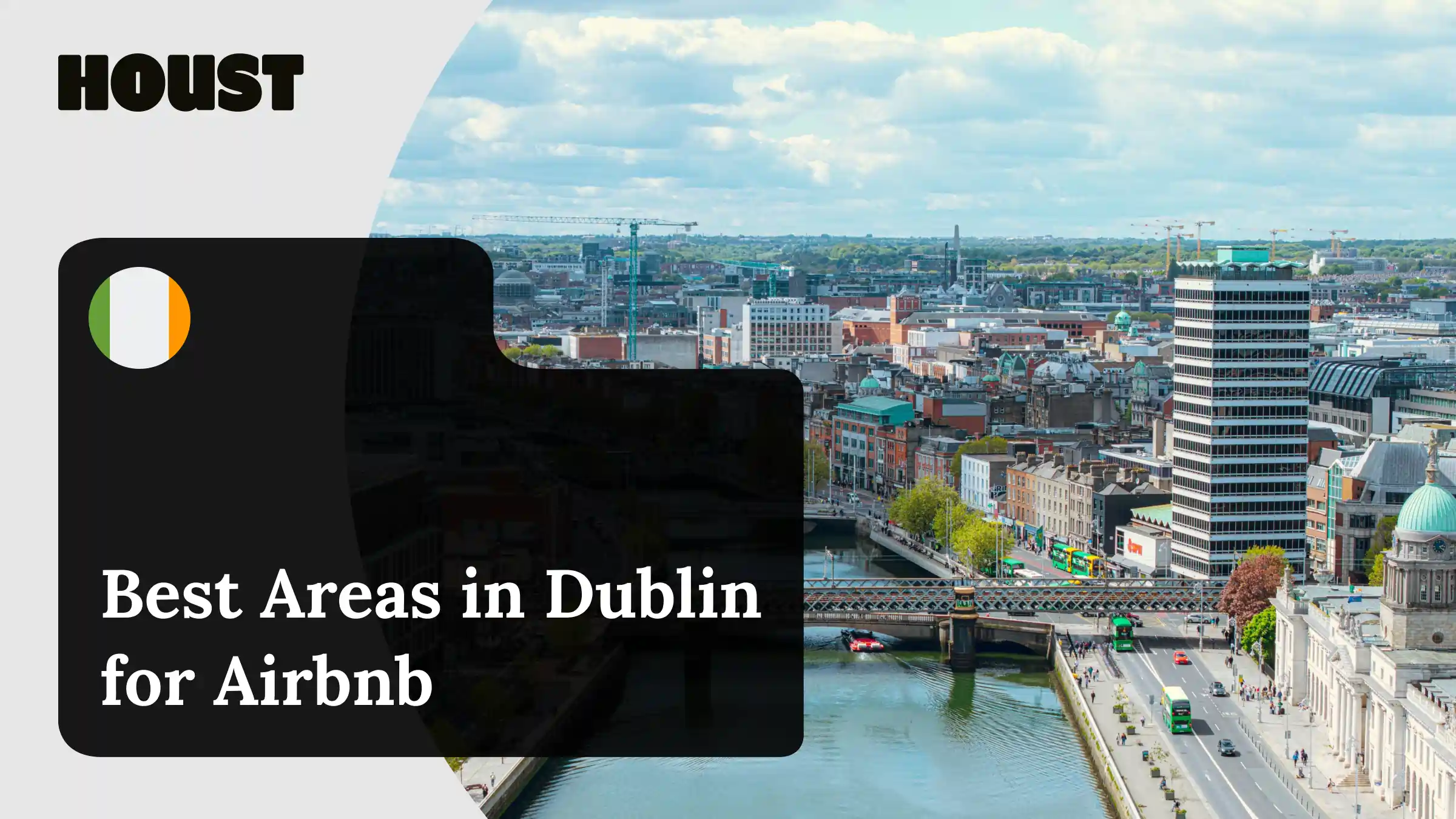
The short version: Dublin is one of Europe’s tightest-supplied short-let markets, with strong year-round demand and some of the strictest rules. The highest rates sit in the city centre around Temple Bar, St Stephen’s Green and the Docklands, while Ballsbridge, Rathmines and Ranelagh offer calmer, more residential stays. A well-run two-bed earns around 206 euro a night at roughly 70% occupancy. But in Dublin, the rules decide where you can operate, so read the regulation section first.
Table of Contents

⭐ Rated 4.8/5 by 2,500+ Hosts
.webp)
⭐ Rated 4.8/5 by 2,500+ Hosts
🚀 Start & Scale Your Airbnb Business with Houst
Join Houst’s Airbnb Business Partnership Program to start, manage, and grow your short-term rental business. With expert marketing, automation tools, and dynamic pricing strategies, we help you maximise earnings and scale faster.
⭐ Rated 4.8/5 by 2,500+ Hosts
Why location matters for Airbnb in Dublin
Dublin has powerful short-let demand for its size. Tourism, a huge multinational tech sector in the Docklands, rugby and concerts at the Aviva and 3Arena, and a steady stream of business travel all keep the calendar busy across the year. Hotel prices are among the highest in Europe, which pushes plenty of visitors towards short lets.
The city is also compact and walkable. Once you are in a reasonably central area, most of Dublin is within reach on foot or a short Luas or bus hop, so the choice of area is more about the guest experience and, critically, the rules than about raw convenience.
That regulation point is the key difference between Dublin and most other markets. Where a property sits, and whether it is your home or a second property, can decide whether you can legally short-let it at all. Get that right before anything else.
The best areas in Dublin for Airbnb
These are the neighbourhoods with the strongest short-let demand, and what each is good for.
Temple Bar and the city centre. The tourist heart of Dublin, with the highest nightly rates and the strongest demand. Cobbled streets, pubs and most of the main attractions within walking distance. Lively and loud at night, so it suits weekend and stag and hen guests more than families.
St Stephen’s Green and Grafton Street. The polished, upmarket centre. Georgian squares, shopping and fine dining, quieter than Temple Bar but just as central. Strong with couples, higher-spending tourists and business travellers.
Docklands and Grand Canal Dock. Dublin’s Silicon Docks, home to the big tech employers, the 3Arena, the Convention Centre and the Bord Gáis Energy Theatre. Modern apartments and reliable midweek corporate demand, plus event spikes. The steadiest business-led area.
Ballsbridge. The embassy district: leafy, affluent and quiet, near the Aviva Stadium and the RDS. Suits upmarket guests, families and rugby or event visitors, with larger period properties and a calmer feel a short hop from the centre.
Rathmines and Ranelagh. Genuine Dublin neighbourhoods just south of the centre, with excellent restaurants, coffee shops and pubs, and a local feel absent from the tourist core. Good value, strong repeat-visitor and longer-stay appeal, quick to the centre by Luas or bus.
Portobello. Trendy and canal-side, with a strong food and cafe scene. Popular with younger visitors and those who want a local, walkable base close to the centre.
Smithfield and Stoneybatter. The northside’s up-and-coming quarter, with independent bars, the Jameson Distillery and the Luas Red Line. Cooler, better value, and appealing to guests who want an authentic Dublin over the tourist strip.
The rules that decide where you can operate
Dublin has the strictest short-let regime of any city in this guide, and the rules come before the area choice.
Rent Pressure Zones. Almost all of Dublin is a Rent Pressure Zone. In an RPZ, short-letting a property that is not your principal private residence generally requires planning permission for change of use, and permission is rarely granted in the city. Short-letting your own home, or a room in it, is treated more leniently, subject to limits.
The 90-day position. If you short-let your principal private residence while you are away, there is an annual cap on how many days you can do so before it counts as a change of use. Letting a spare room while you live there is more flexible.
Fáilte Ireland register. Ireland’s Short-Term Tourist Letting Register is now in force. All short-let hosts must register, and platforms are required to check for a valid registration number, so an unregistered property risks being removed.
The practical takeaway: in Dublin, an existing, compliant, registered short-let is a genuinely valuable asset, because new whole-property permissions are hard to come by. Always confirm the planning and registration position for a specific property before you buy or list.
Managing a short let in Dublin
Dublin rewards two things: compliance and pricing that flexes with the calendar. Rugby internationals at the Aviva, concerts at the 3Arena, St Patrick’s Festival and major conferences all move rates sharply, and the tight supply supports strong nightly rates for compliant hosts.
Houst manages short lets across Dublin, from city-centre apartments to homes in Ballsbridge, Rathmines and the Docklands. We handle registration and compliance as part of the service, list across Airbnb, Booking.com, Vrbo and Google, price dynamically against local demand and events, and manage guest communication and cleaning. See the detail on our Dublin Airbnb management page, or read what a property earns in our Dublin income guide.
Getting started in Dublin
Temple Bar and the city centre deliver the highest rates and demand but the liveliest, noisiest setting. St Stephen’s Green offers the same centrality with more polish. The Docklands bring steady corporate demand. Ballsbridge, Rathmines, Ranelagh and Portobello trade some rate for calmer, more residential, better-value stays.
In Dublin, though, the rules come first. Confirm the RPZ planning position and register the property before you weigh the areas. Then run your specific address through a free income estimate to compare projected earnings against the purchase price.
Airbnb areas in Dublin: common questions
What is the best area in Dublin for Airbnb?
Temple Bar and the city centre deliver the highest nightly rates and the strongest tourist demand. The Docklands are best for steady corporate stays, while Ballsbridge, Rathmines and Ranelagh suit calmer, more residential bookings. Subject, always, to the local rules.
Which Dublin area has the highest Airbnb nightly rate?
The city centre, particularly around Temple Bar, St Stephen’s Green and Grafton Street, commands the highest rates, driven by tourism and central demand. The Docklands perform strongly midweek on corporate travel.
Do I need planning permission for an Airbnb in Dublin?
Often, yes. Almost all of Dublin is a Rent Pressure Zone, where short-letting a property that is not your principal private residence generally needs planning permission for change of use, which is rarely granted. Letting your own home is treated more leniently. Check your specific property first.
Do I need to register my Dublin short let?
Yes. Ireland’s Fáilte Ireland Short-Term Tourist Letting Register is in force, and all hosts must register. Platforms check for a valid registration number, so an unregistered property risks being delisted.
How much can I earn from an Airbnb in Dublin?
A well-run two-bed earns around 206 euro a night at roughly 70% occupancy, though this varies by area and property. Get a free estimate for your specific address to see the realistic figure.
Frequently asked questions
What is the best area in Dublin for Airbnb?

Which Dublin area has the highest Airbnb nightly rate?
Do I need planning permission for an Airbnb in Dublin?
Do I need to register my Dublin short let?
How much can I earn from an Airbnb in Dublin?


Reviewed by Andrei S., Head of Growth at Houst, for regulatory accuracy and commercial relevance.


